
Women Defenders: Community Perspectives for a More Liveable World
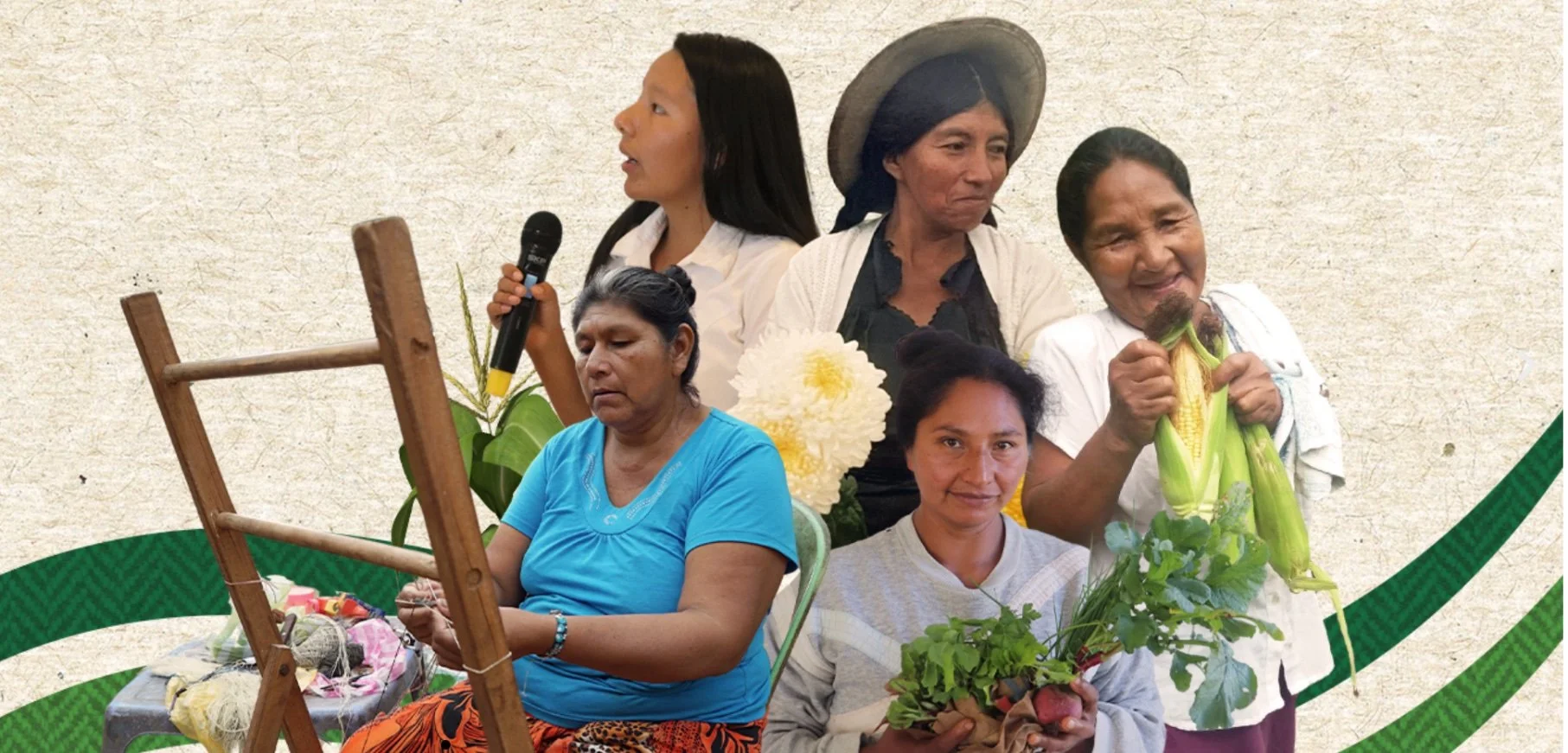
The story of the Ayoreo women of Campo Loro, in the department of Filadelfia in the Paraguayan Chaco, about 500 km from Asunción, shows how collective action, strengthened by resources and accompaniment, can transform community life, protect the land and open pathways towards a more liveable world.
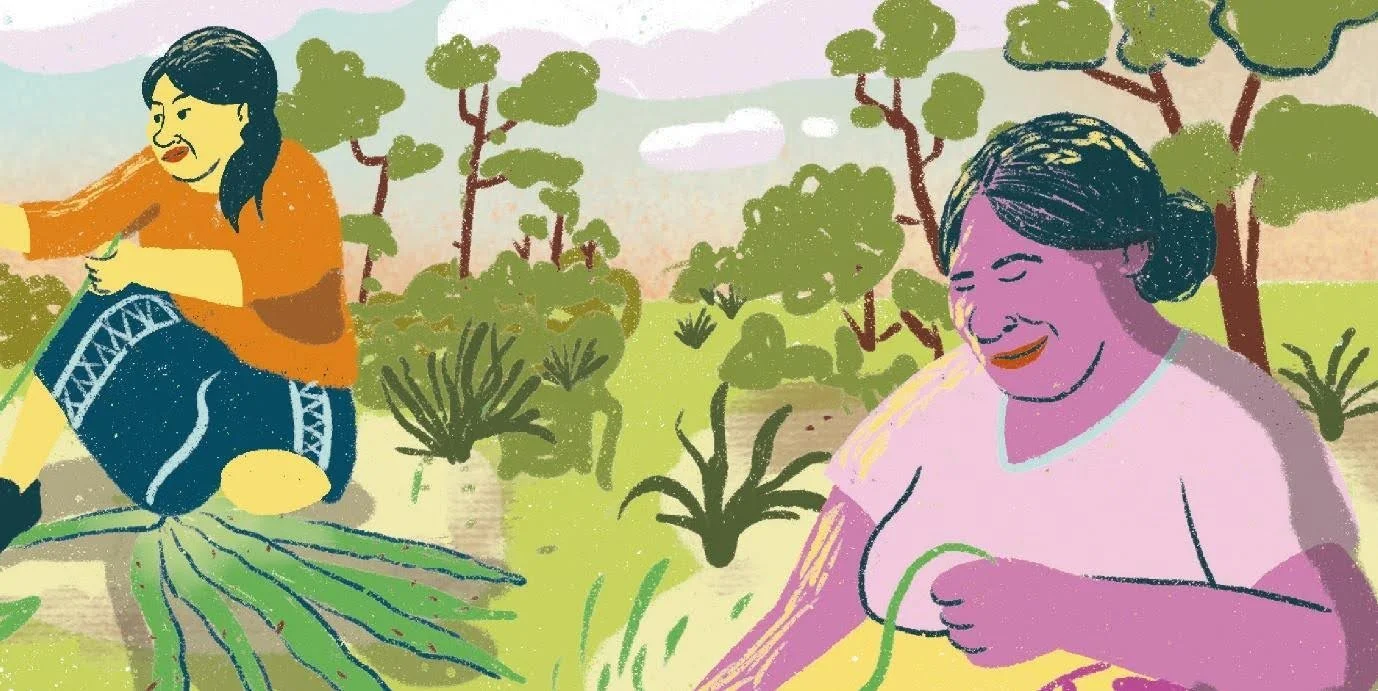
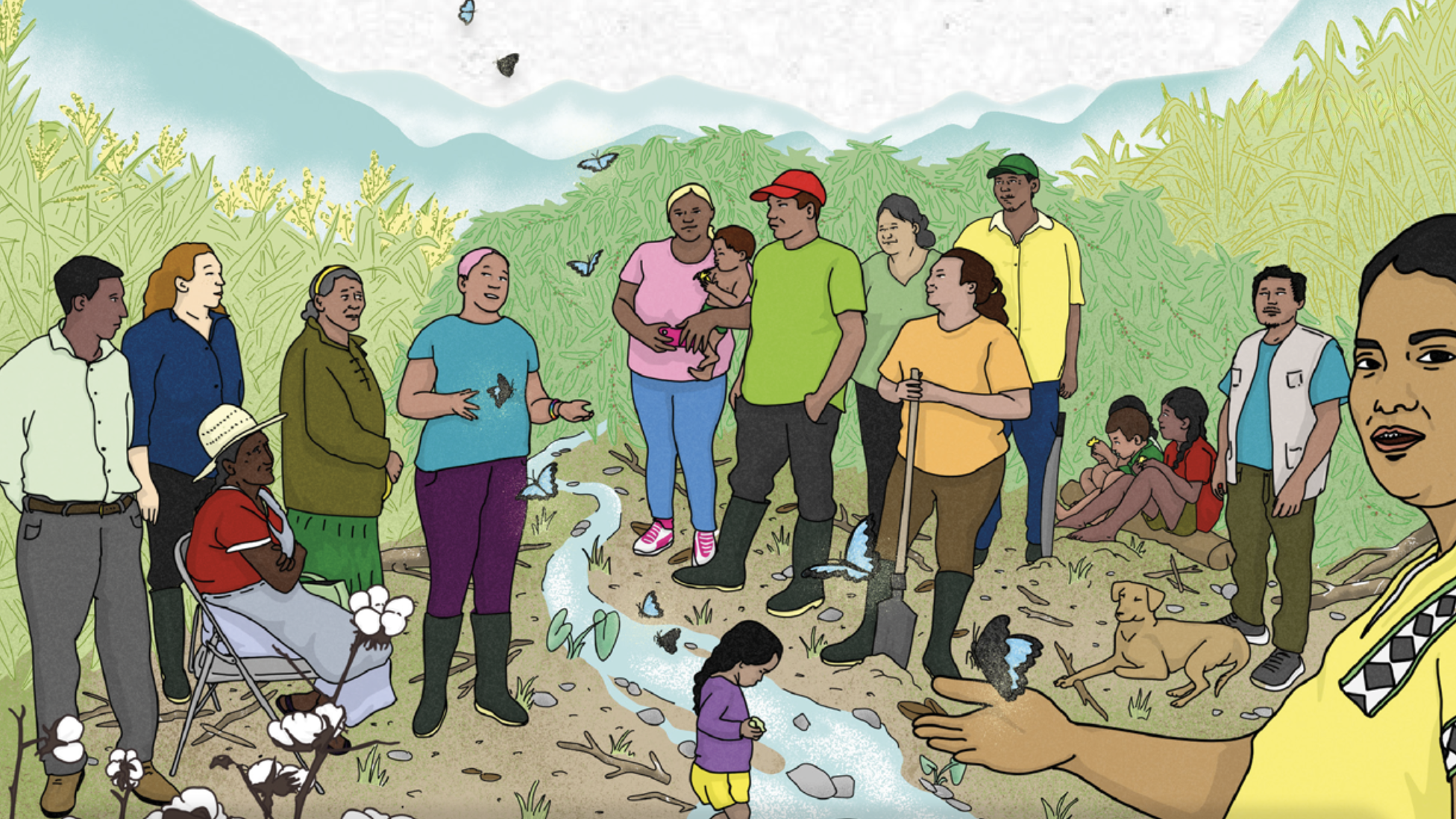
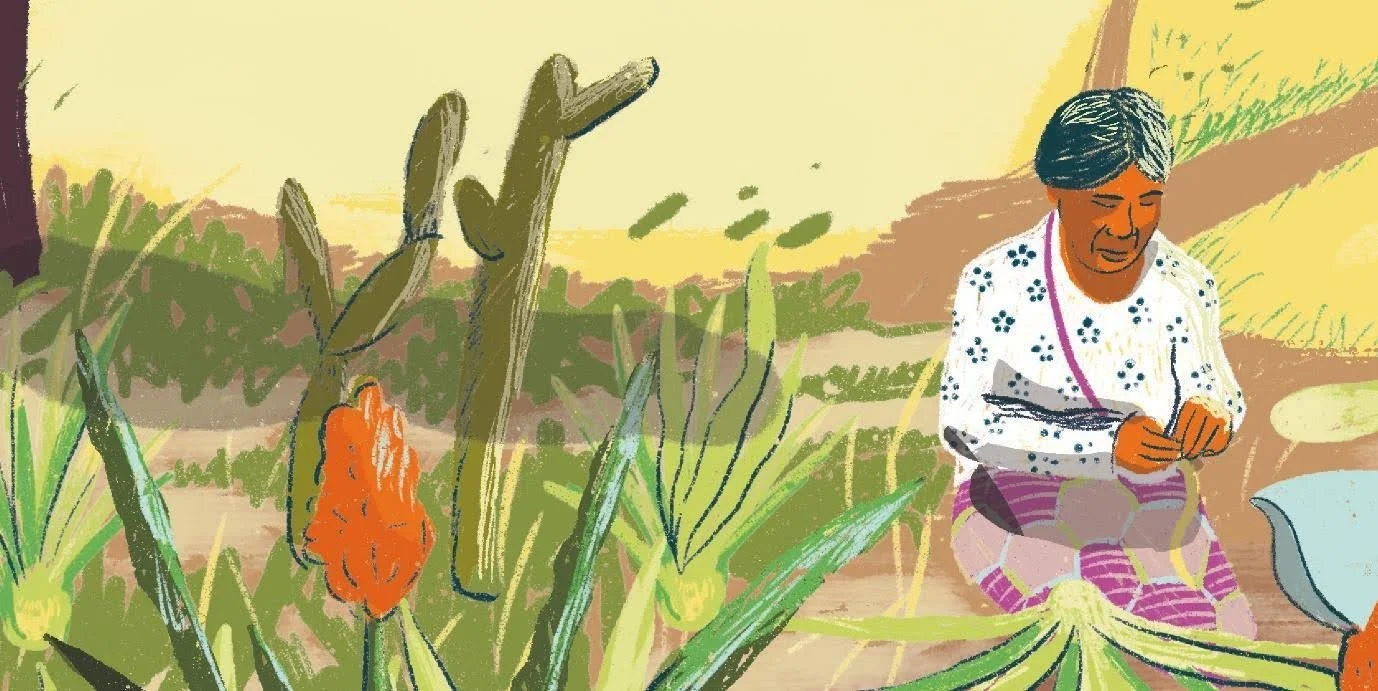
Illustrations by Sofía Amarilla, Lorena Barrios, and Kattia Sánchez for the publication DEFENSORAS: Stories of Climate Change and Transformation in the Face of the Climate Crisis.
This story explores:
When funding ignores Indigenous territoriess
The plant diversity of the Paraguayan Chaco stands in stark contrast to the expansion of extensive cattle ranching, which has been present for decades. Natural cycles, historically monitored by indigenous peoples, have been disrupted by overexploitation. The loss of biodiversity and the increase in droughts threaten access to safe water and food sources. Thus, the ancestral use of the land is becoming increasingly difficult to sustain. However, the Ayoreo women of Campo Loro preserve their culture through their weaving and the struggle for their rights, adapting with resilience to these changes.
How culture, territory and autonomy are woven together as a response to climate change
The land of the Chaco, despite its erosion and fragmentation, remains deeply connected to the Ayoreo people through its women. They walk for hours in groups to dig up Bromelia hieromyni, known as dajudie in Ayoreo and more commonly referred to by the Guaraní word karaguata. With these plants, which they carry on their heads, they create the fibers for textiles and crafts that bring deep memories to life.
Identity and nature intertwine in shapes and colors that represent snakes slithering with their scales, anteater mounds breaking the earth with their circles, traces of the deer’s wanderings, and lines left by passing clouds. The artisans are building a path to the future with the strength of their past. They are adapting to the climate crisis by planting karaguata trees near the community. This will provide them with a readily available source of raw materials, restore biodiversity, and transform their lives.
The story of the Ayoreo women of Campo Loro is also the story of many other women in the region. Since 2014, the Fondo de Mujeres del Sur (FMS), has been supporting groups working at the intersection of socio-environmental and gender justice. And since 2017, it has been supporting the Association of Ayoreo Artisans to strengthen their initiatives: preserving their habitat and ancestral culture, and consolidating artisanal production as a means of livelihood.
As they grew stronger as a group, the Ayoreas’ desire to have a greater impact within and on behalf of their community grew. In 2019, they participated in the “Women and Access to Natural Resources—Water and Land” Learning Path in Santiago del Estero, Argentina, an international gathering with other women whose struggles were similar to their own. There, they realized that to advance on this path, they needed to make their demands visible and foster dialogue. That is why they decided it was vital to learn to read and write.
The literacy program, which received support from the FMS, was conducted in the Ayorea language, and the Ayorea people were involved in developing the curriculum. Initially, the program aimed to help them recognise their names on documents and during administrative procedures. It also improved the marketing of their products and strengthened their ability to assert their rights, both with community leaders and with government officials.

Illustrations by Sofía Amarilla, Lorena Barrios, and Kattia Sánchez for the publication DEFENSORAS: Stories of Climate Change and Transformation in the Face of the Climate Crisis.
How women move from exclusion to community organization
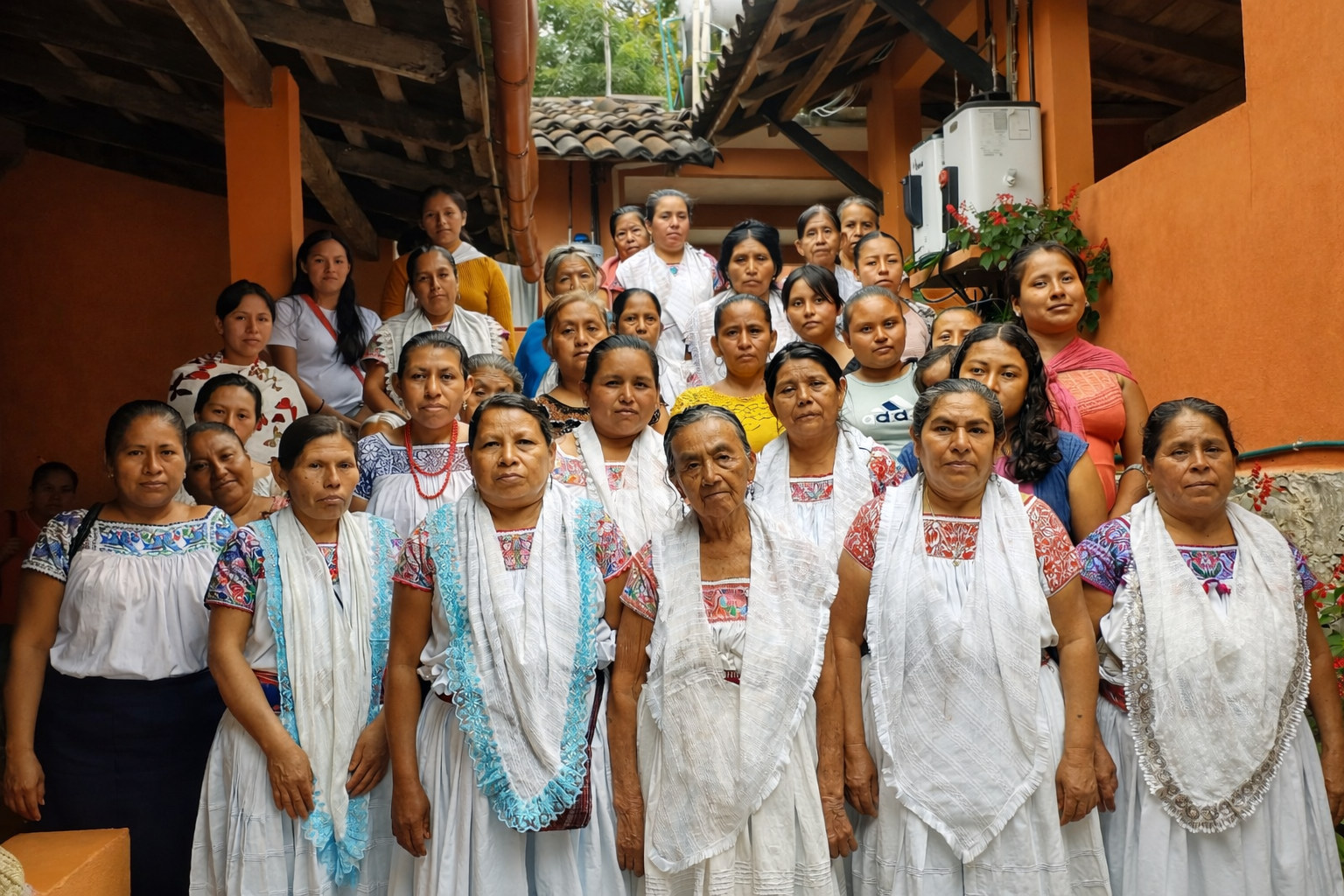
At the Campo Loro Women Artisans’ Cultural Center, run by the Women Artisans’ Association, women gather to create and display their artwork and devise strategies for community development.
The Ayoreo women’s organization prioritizes community action in response to the climate crisis and provides tools to address the structural violence that excludes them from decisions regarding state policies.
In 2023 and 2024, resources were allocated to strengthen technical and organizational capacities. This enabled the Ayoreas to meet with independent professionals committed to the environmental sustainability of the Chaco region.
Eleven years ago, the FMS made the intersection of socio-environmental and gender justice a priority. Today, this approach is a central pillar of its work. Since then, it has channeled resources to support a growing number of groups of women environmental defenders, expanding its reach to new regions and causes, and establishing partnerships with other funds and organizations across the continent. Along the way, it has supported more than 300 initiatives from over 100 organizations in South American countries such as Argentina,Bolivia (at the Bolivian Chaco), Paraguay, Peru, and Uruguay.
In 2016, the FMS joined the Global Alliance for Green and Gender Action (GAGGA) as a partner. This initiative was instrumental in expanding and strengthening the “Empowering Women Environmental Defenders” program. With this and other support, the FMS reached organizations of more indigenous peoples: Ayoreas, Ishir, Chamacoco, Ishir Yvytoso, Nivaclé, Manjuy, Maskoy, Guaná, Ache, Guaraní, and Pai Tavytera. It expanded its reach to other geographic regions, beyond the American Chaco ecoregion where we began this journey, into the Atlantic Forest and the wetlands. Additionally, it provided strategic and technical-political support to women environmental defenders across a broader spectrum of causes and demands.
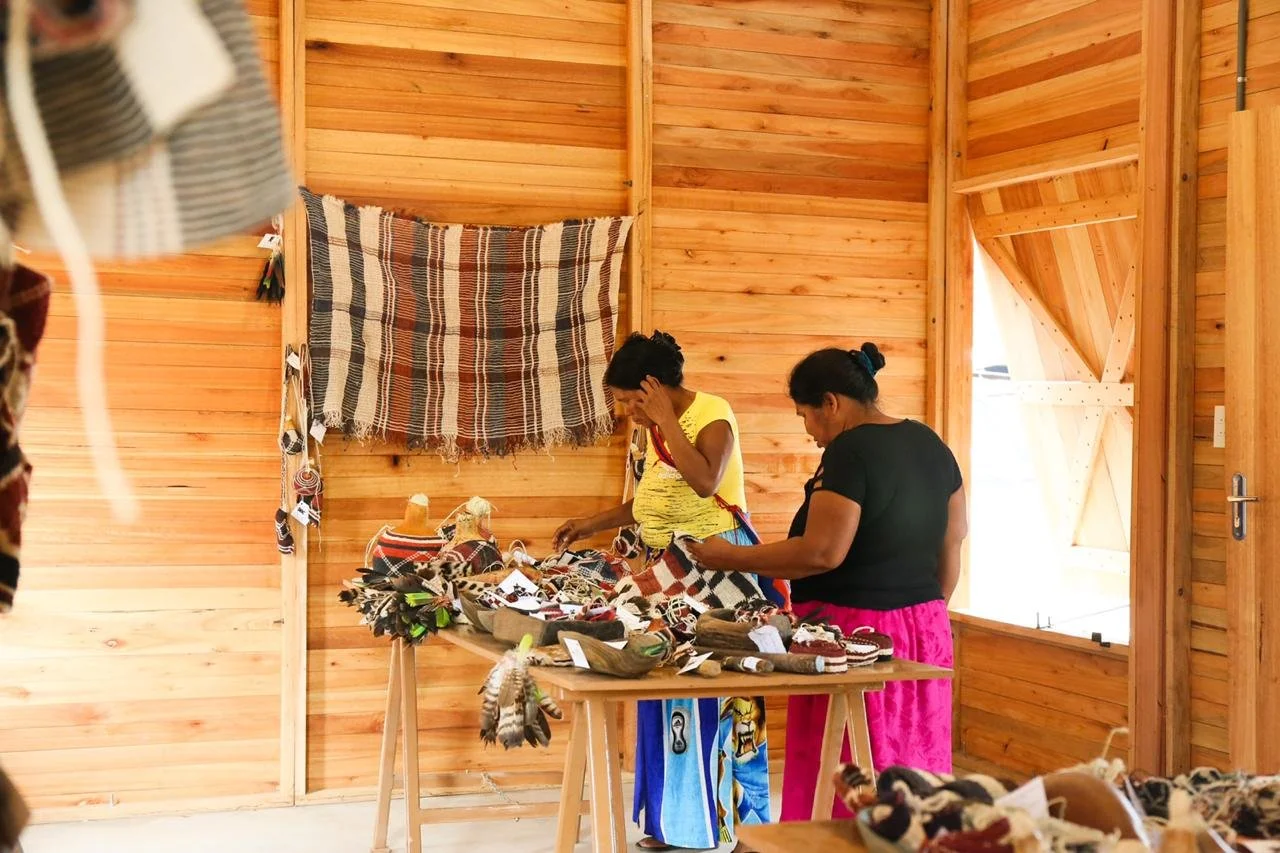
Marina, an Ayoreo woman leader, took on a more prominent role in her community. The Campo Loro Artisan Women's Cultural House is emerging as a bridge for community development planning, where participating women express their needs and envision new ventures.
What this experience teaches about global climate finance
For women environmental defenders, sustainability takes on a broader meaning and involves a holistic approach linked to the planet’s habitability. The communities supported by the FMS work to uphold not only people’s well-being, but also equity, social cohesion, the preservation of and access to the commons, in harmony with natural processes, the social and community fabric, and the long-term functioning of the economy.
The dream of “The Land Without Evil” is part of the Guaraní worldview and encompasses two concepts: Teko and Tekoha. Teko is the way of being on the earth; Tekoha is the place to be, to thrive, where life, culture, and the economy are carried out. Without Tekoha, there is no Teko, there is no place to be who we are. This worldview also resonates in other indigenous cultures, such as the Ayorea, which deeply value the importance of, respect for, and profound connection with the earth and the territory.
A community-focused approach fosters solutions that make the world a better place to live. With funding, that dream is one step closer to becoming a reality.
Why flexible funding changes the lives of communities
Support the Ayoreo women and the environmental defenders who, day by day, are weaving alternatives in the face of the climate crisis. Champion flexible, sustained, and gender-responsive funding, like the one that Fondo de Mujeres del Sur cultivates alongside the Asociación de Artesanas Ayoreas, so that the dream of a more habitable world comes ever closer to being possible.
“The projects allowed us to better understand the women and the Ayoreo people, and to strengthen cultural identity and collective organization”
Connect with the organization
Email: fondo@mujeresdelsur.org.
Redes sociales: Youtube | Instagram | LinkedIn
Sitio web: mujeresdelsur.org
Share this story on social media


