
Nahua Women Defend Body, Territory, Ancestral Knowledge and Community Autonomy
This story tells the journey of Nahua Indigenous women in Cuetzalan, in the north-eastern Sierra of Puebla, Mexico, and shows how community organization, ancestral knowledge and access to flexible finance have made it possible to defend territory, strengthen women’s autonomy and build alternatives to a development model that erodes life.
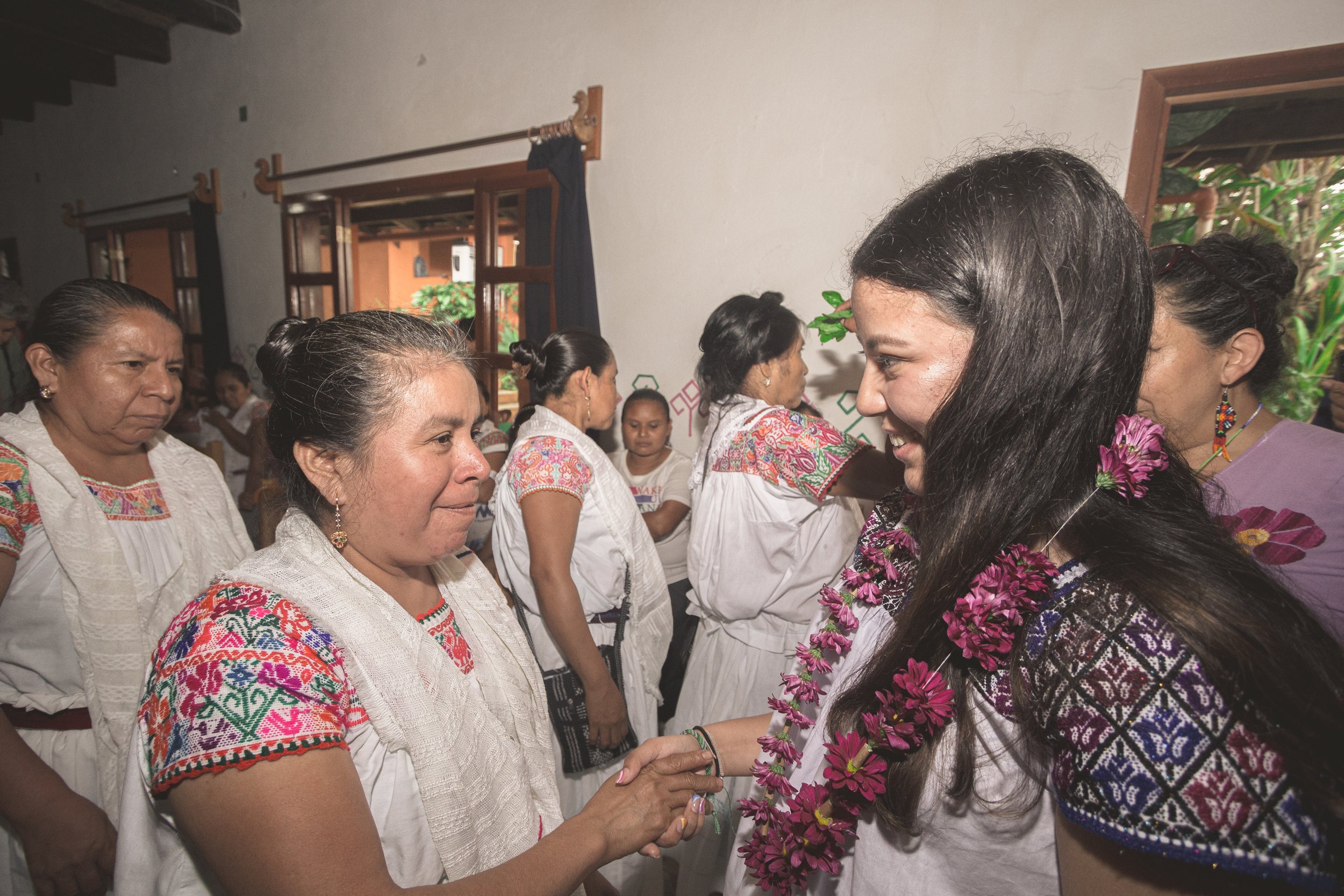
Welcoming visitors
This story explores:
When climate finance ignores indigenous territories and knowledge
How the shift from extractive tourism to community and environmental autonomy takes place
What the experience of Cuetzalan reveals about just climate finance with an indigenous perspective
What needs to happen next to advance gender-just climate finance
When climate finance ignores indigenous territories and knowledge
For decades, Indigenous women in Cuetzalan have faced multiple barriers to sustaining their ways of life and defending their territorial integrity. Authorities have promoted mass tourism as an economic opportunity, yet in practice this model has driven gentrification, environmental degradation and the marginalization of local knowledges and livelihoods.
Despite their community organizing since 1985, meaningful access to climate and socio-environmental finance has been limited. Funding is often channelled towards externally-driven, highly technical solutions that are inaccessible to grassroots groups and collectives. Technical language, rigid criteria and a disconnection from lived realities exacerbate the challenges of accessing climate finance.
All too often, these defenders have been included only symbolically, without recognition as rights-holders and decision-makers. This exclusion has rendered invisible their fundamental contributions to biodiversity protection and to building sustainable alternatives rooted in traditional knowledges and community-led responsible tourism.
How women are building their own alternatives through community-based tourism, feminism and trust-based funding
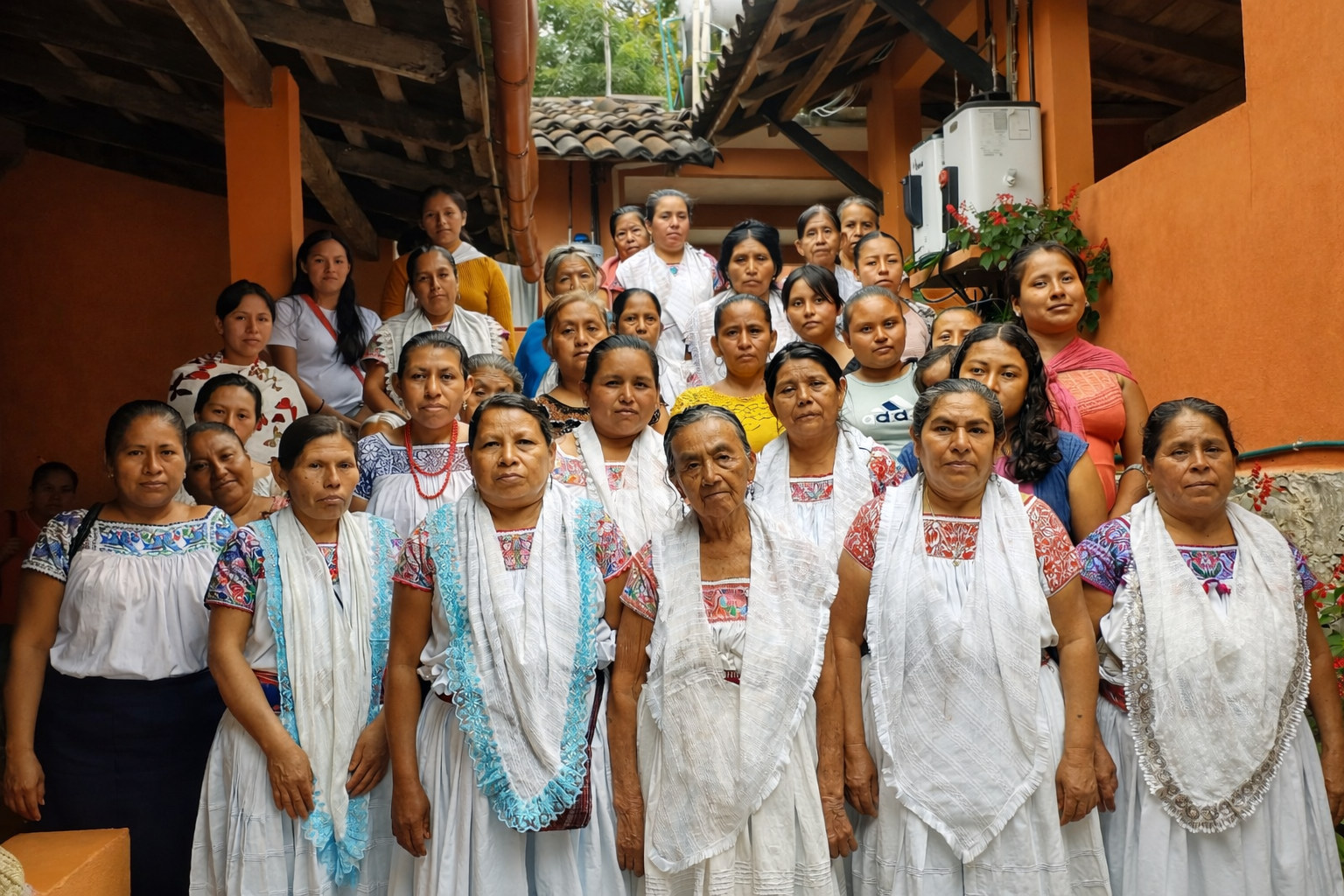
Faced with these barriers, the Masehual Siuamej Mosenyolchicauani S. de S.S. group decided to forge its own path. Made up of 100 Nahua women, since 1997 it has operated Hotel Taselotzin, a collective community-based tourism project that generates dignified income, promotes sustainable practices, and makes women's leadership visible.The collective has also developed projects in recycled paper, family vegetable gardens, dry toilets, fuel-efficient stoves, rainwater harvesting, meliponiculture, and the transmission of traditional medicine knowledge.
The most recent initiative seeks to strengthen knowledge of the temazcal as an ancestral practice and to create a training school grounded in community feminism. This school addresses topics such as body-territory, self-care, climate change, biodiversity, and economic rights. The project makes it possible to recover the memory, roots, and voice of these Indigenous women, who continue to grow stronger collectively, from their own worldviews, and in harmony with nature. These efforts have been bolstered by close mentorship and by FASOL’s flexible, trust-based funding, aligned with GAGGA’s vision of supporting life-sustaining processes and strengthening local leadership. GAGGA’s flexible, multi-year funding enabled FASOL to work closely with Masehual Siuamej Mosenyolchicauani for the well-being of their community, in accordance with their own vision and goals.
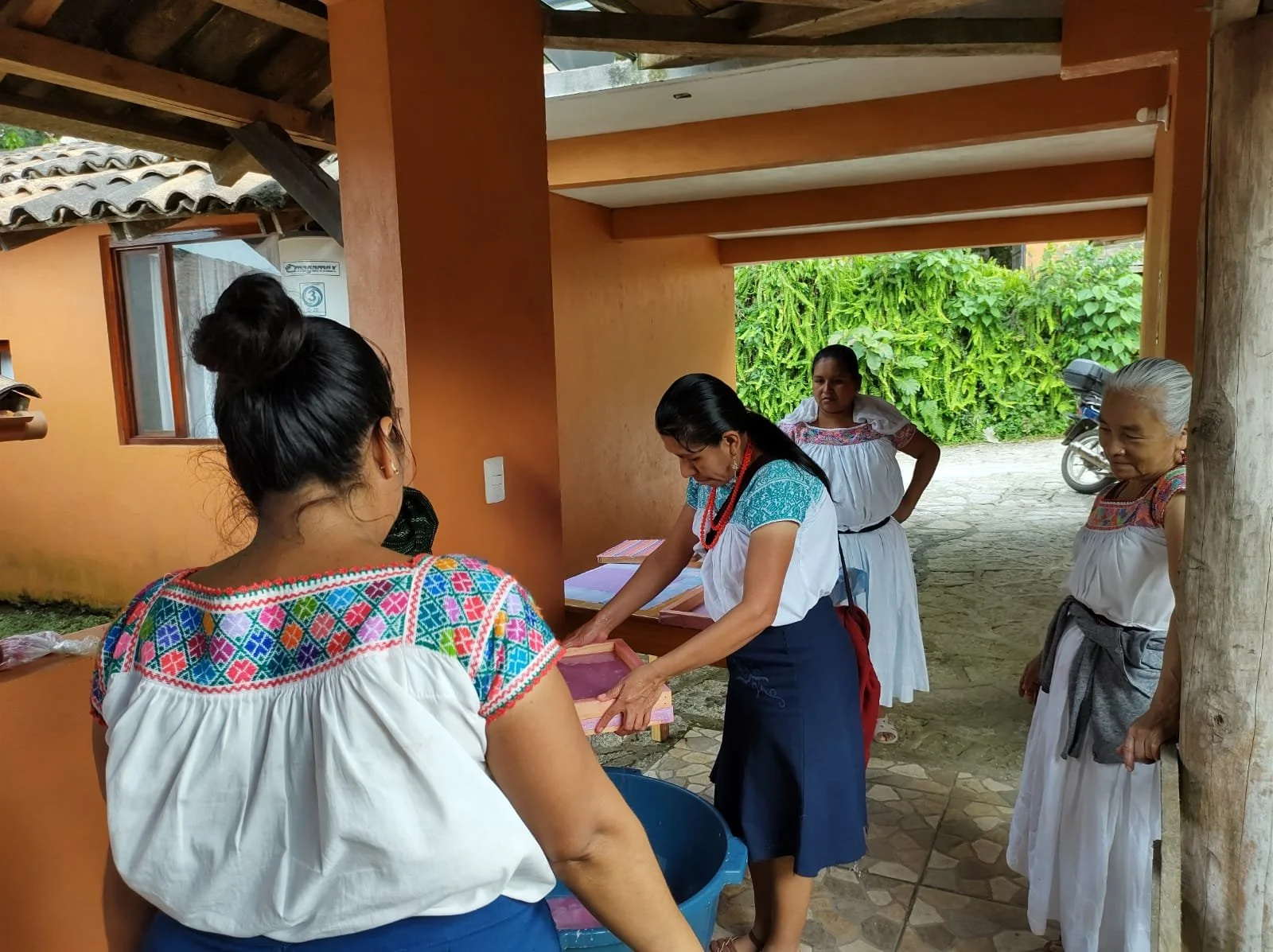
Recycled paper-making workshop
How the shift from extractive tourism to community and environmental autonomy takes place
At the community level, the women have gained confidence, leadership, and advocacy capacity. They now have their own spaces for political and cultural education, which has enabled many of them to participate in regional networks defending their territory, such as the Consejo Tiyat Tlali and the Indigenous Women’s House. Through community-based tourism and Hotel Taselotzin, they have succeeded in positioning a model that contrasts with extractive tourism, promoting responsible practices and generating income for more than 100 families. The collective has also fostered intergenerational exchange, ensuring the transmission of traditional knowledge and making use of young women’s technological skills to advance the collective’s goals.
On a personal level, the women have gained autonomy and self-confidence to take part in different spaces, also bringing about changes within their families, who now support them in participating in learning and advocacy spaces.
On the environmental front, eco-technologies and traditional knowledge have been implemented to strengthen local resilience to climate change: dry toilets, rainwater harvesting, organic fertilizers, traditional medicine, and interpretive trails featuring medicinal plants.
At the systemic level, they have placed the need for sustainable tourism with a rights-based approach on the municipal and regional agenda and have demonstrated that climate finance can strengthen the autonomy of Indigenous peoples and women. They have forged alliances with other local organisations in Cuetzalan and the Sierra Norte and Nororiental regions of Puebla, uniting their struggles to defend their territory.
What the experience of Cuetzalan reveals about just climate finance with an indigenous perspective
This experience shows that climate finance cannot be reduced to infrastructure or large-scale projects. It must reach directly those who sustain life in their territories: grassroots groups and collectives, often made up of Indigenous people, women, and other groups with valuable practices and knowledge for addressing climate change. The case of Cuetzalan demonstrates that strengthening these traditional and sustainable practices offers real solutions to climate change, sociocultural challenges, and human rights violations. It also challenges false solutions based on mass tourism or external projects that disregard the rights of local communities.
On a global scale, this story offers a clear model for just and accessible financing. It is flexible, community-based, and incorporates a gender and intersectional perspective. Furthermore, it recognizes indigenous knowledge as a central component of the just transition.
What needs to happen next to advance gender-just climate finance
This experience underscores the need to strengthen alliances between Indigenous and grassroots organizations and international climate cooperation mechanisms. Advancing gender-just climate finance requires sustained support for community-led initiatives, and financing models that are flexible, accessible and genuinely grounded in local realities and rights.
Support Indigenous women and community defenders. Promote flexible, trust-based funding, like the kind FASOL has woven together with Masehual Siuamej Mosenyolchicauani, that drives real and lasting change.
“As women, we are daughters of the rain and of the Earth, and our voice grows stronger every time we care for our land. The needs we face here in the Northeast Sierra of Puebla are the same as those in other parts of the world, and it also gives us strength to know that on other continents and throughout the rest of Latin America, there are women who inspire us with their genuine commitment to protecting life, not just for themselves, but for everyone.
The climate crisis has reached us, and our work is multiplying; we cannot do this alone. We need alliances between indigenous organisations and international climate cooperation.”
Video: What is FASOL?
Connect with the organization
Share this story on social media


