
Financing Change: How Women Transform Climate Budgets for Equity and Resilience
In Nepal, climate finance has long bypassed women, Indigenous peoples, and grassroots communities. By combining community philanthropy, public budgets, and climate funds, Tewa and Prakriti Resources Centre, with support from the Global Alliance for Green and Gender Action, are proving that gender-just, locally led climate finance delivers tangible environmental and social transformation.
This story explores:
How women in Nepal are transforming climate budgets: from exclusion to redistribution
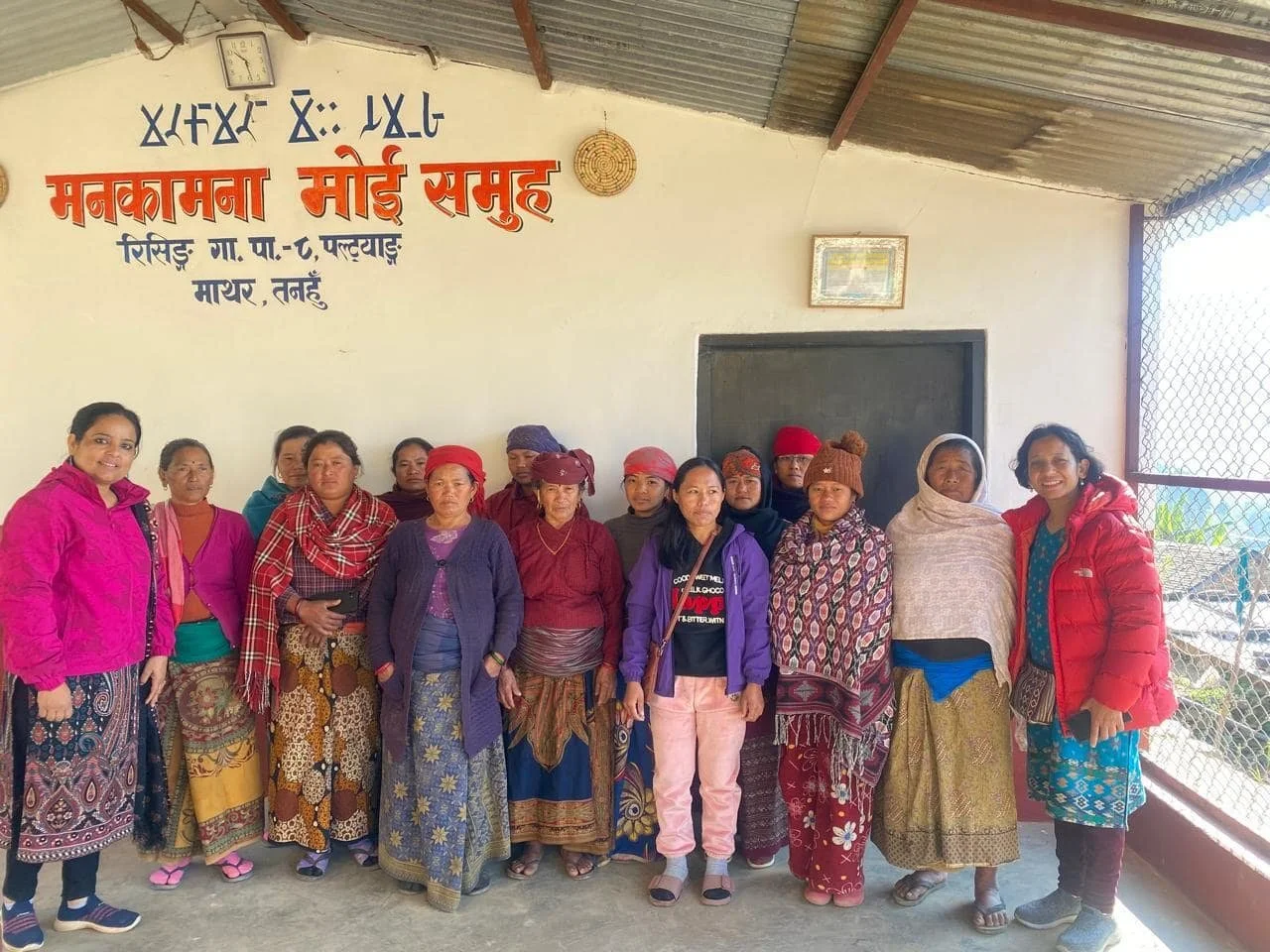
In 2018, Prakriti Resources Centre (PRC) and Tewa, in collaboration with the Global Alliance for Green and Gender Action (GAGGA), began discussions and capacity-building on gender-just climate solutions advocacy. Since 2021, they have piloted a transformative blended financing model that empowers women at the local level to lead and implement gender-just climate actions.
Tewa is Nepal's first women's fund and the first in South Asia. It supports grassroots women's groups through community philanthropy, grants, and capacity building to advance women's rights and environmental justice. PRC is an environmental organization focused on climate change, finance, and advocacy. It partners with civil society to influence policy and practice.
When climate budgets ignore women, communities bear the cost
In Nepal, climate finance has historically overlooked women, Indigenous peoples, and grassroots communities, channeling funds to large-scale projects with minimal local benefit. Across the Kathmandu, Kavre, and Ilam districts, and other agricultural regions of Nepal, women face systemic exclusion from municipal and national budget decisions, despite their critical roles in managing water, land, and food systems.
In Kirtipur, degraded lands from past cement mining received no restoration funding. Barren plots littered with limestone and waste worsened soil erosion and biodiversity loss. In Ilam's hills, climate-induced water scarcity forced women to trek hours daily for water, impacting their health and livelihoods, yet climate budgets ignored their needs. Agricultural communities, reliant on commercial hybrid seeds, struggled with crop failures and nutritional deficits, with no support for sustainable practices.
Complex funding procedures, lack of transparency, and tokenistic participation further marginalized women-led groups. Without access to climate finance, these groups couldn't address deforestation, wetland degradation, or food insecurity, leaving communities vulnerable to escalating climate impacts.
How feminist pathways to climate finance are being built
Since 2018, Tewa and PRC have partnered to strengthen grassroots women's organizations on climate change and finance. The collaboration began at a Green Climate Fund (GCF) event and enables these organizations to advocate for devolved, gender-just climate resources at local and national levels. Through trainings and dialogues, the partnership has built advocacy skills among grassroots women's groups and CSO representatives. It has promoted gender and financial accountability, and empowered women to influence climate budgeting and policy at both local and national levels.
This collaboration was formalized under GAGGA's first phase (2016-2020), where Tewa and PRC jointly organized capacity-building trainings for Tewa's grantee partners on climate awareness and advocacy for climate finance. GAGGA's second phase (2021-2025) built on this foundation, enabling Tewa to continue its grant-making and accompaniment support while PRC partnered with these organizations to implement projects advancing gender-just climate action.
With support from GAGGA, Mama Cash and Both ENDS, Tewa and PRC supported five women's groups: Sahayatra Nepal and Anjeliya Mahila Krishi Sahakari Sanstha of Ilam district, Srijansheel Mahila Samaj Nepal and Women Empowerment Centre (WEC) of Kathmandu district, and Mahila Jagaran Samuha of Kavre district.
Over four years, these groups built connections with municipal governments, enabling women to engage in decision-making, negotiate budgets, and access funds for gender-just climate solutions (GJCS). The Gender-Just Climate Solutions Transformative Model repositioned women as active leaders by equipping them with knowledge on climate risks, adaptation strategies and governance, empowering them to advocate for localized solutions.
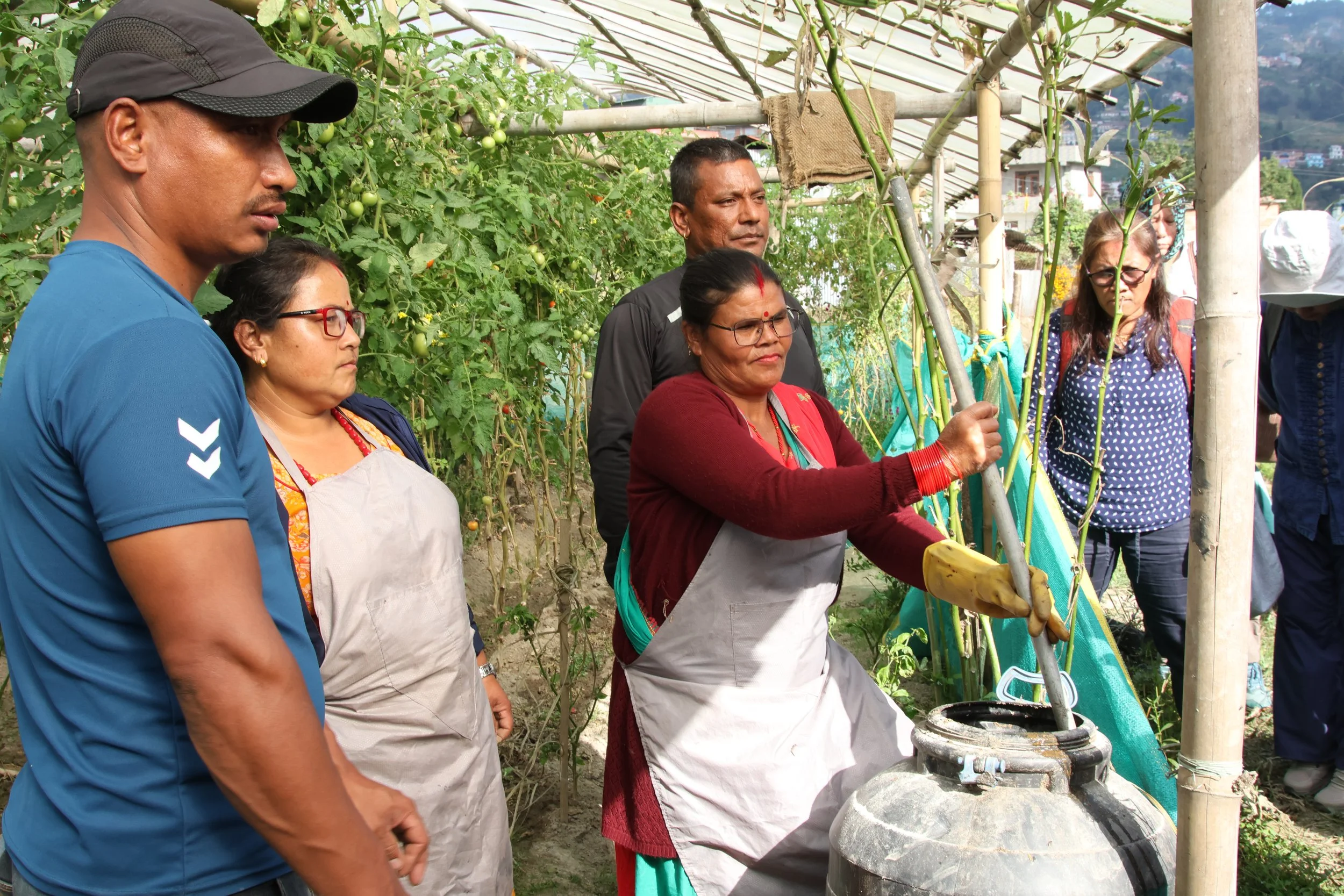
In Kirtipur, WEC partnered with the International Analog Forestry Network (IAFN) to transform a 1,000-square-meter barren cement mine into Nepal's first Analog Forest. They planted over 100 native and edible species, built dry stone walls to prevent erosion, and created a rainwater pond, all using chemical-free practices like vermicompost and mulching.
In Ilam, Sahayatra constructed water tanks, pipelines, and wetland conservation structures. They formed over ten community-based women's groups, including one from the Indigenous Lepcha community. Anjeliya promoted organic farming by producing compost and cultivating local seeds, while planning a nursery for endangered varieties.
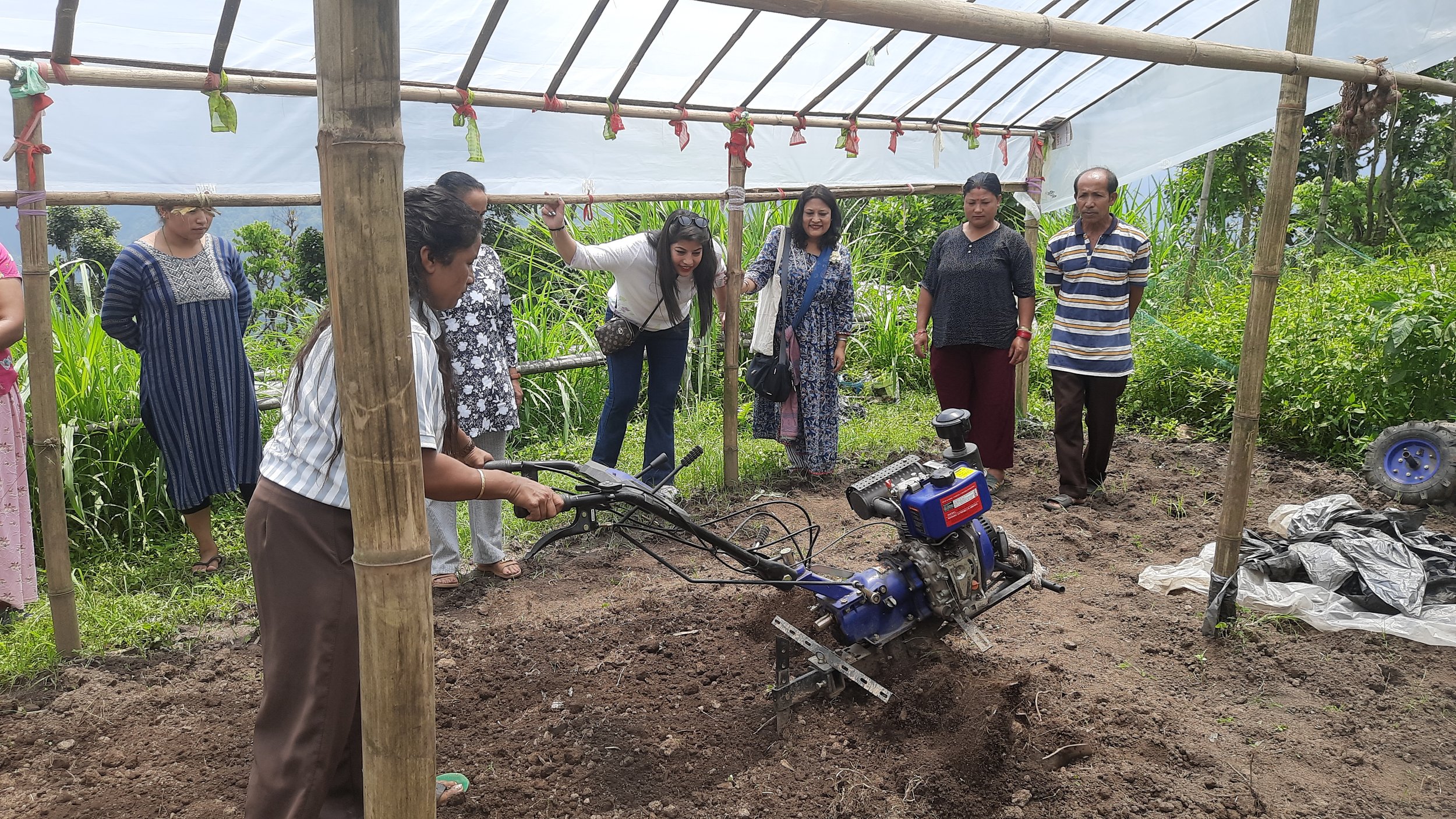
These groups have also been promoting e-cooking to lower carbon emissions, ease women's workload, and reduce health risks. Mahila Jagaran Samuha in Banepa piloted nature-based agriculture, scaling from 10 to 50 farmers with municipal support. Srijansheel Mahila Samaj Nepal secured USD 5,956.43 (NPR 833,900) from Bagmati Province, the first time such funding was awarded, to train women in producing cotton and allo fiber bags.
These groups focused on advocacy and capacity-building by training officials and mobilizing women's networks. WEC hosted workshops, Sahayatra conducted orientations with Ilam's government, and Anjeliya trained mothers and school authorities. PRC facilitated training on three key areas: bridging knowledge on climate change and gender, local level budgeting and planning, and rights-based advocacy. GAGGA's flexible, multi-year grants and PRC's technical support helped these initiatives scale. Meanwhile, Tewa and PRC connected groups to national advocacy platforms for gender-just climate finance.
How women are reshaping power, budgets and climate outcomes
The most significant transformation has been the shift in how local authorities and communities view gender stereotypes and women's leadership. Community-led women's groups are now recognized as key players in addressing environmental and climate change issues. Municipalities and wards actively invite these groups to collaborate on Gender-Just Climate Solutions (GJCS), supported by dedicated municipal budgets. This change reflects growing acknowledgment of women's roles in driving sustainable, community-led climate initiatives. These partnerships amplify local climate action and influence broader policy frameworks.
Hem Kumari Siwa, Chairperson of Sahayatra Nepal in Ilam, describes this shift firsthand: "Ilam Municipality now recognizes Sahayatra Nepal as a key organization working on environment and climate change. While we once had to advocate for integrating climate actions into municipal planning and budgets, now municipalities proactively invite us to contribute. Having implemented gender-just climate solutions across 10 municipalities in Ilam district, the growing demand from municipalities and wards to collaborate with us has created a dilemma in prioritizing where to engage next."
The interventions delivered transformative outcomes. In Kirtipur, WEC's Analog Forest revitalized a degraded park with over 100 plant species, 13 bird species, and macro-organisms like earthworms. This curbed erosion and boosted moisture retention. The success influenced Kirtipur's municipal council to allocate USD 14,285 in 2024 for women-led restoration, shaping national policies for gender-inclusive ecological restoration. In Ilam, Sahayatra's water systems eased women's burdens, restored wetlands, and supported wildlife. Their advocacy included formulating a Local Adaptation Plan of Action (LAPA), which redirected USD 10,714.29 to women-led water projects. The Lepcha group secured funds for Indigenous-led conservation. Sahayatra is also supporting women's groups in Ilam with legal registration, strengthening women's agencies for collective movement building and climate advocacy.
Anjeliya's organic farming conserved biodiversity, reduced reliance on hybrid seeds, and improved child nutrition. This work secured USD 10,714 for subsidies and biodiversity programs. In Banepa, Mahila Jagaran Samuha scaled their nature-based agriculture pilot with USD 3,800 for LAPA and USD 5,120 for bio-fertilizer production. Srijansheel Mahila Samaj Nepal received USD 5,956 from Bagmati Province to empower women in economic and climate resilience activities.
Since 2022, women's groups across these regions have accessed approximately USD 153,982 for climate and conservation initiatives. This includes USD 118,522 of these five women's groups and USD 35,460 from other women's groups who participated in Tewa and PRC's trainings. The funds supported water and wetland conservation, organic and nature-based farming, e-cooking, LAPA formulation, and awareness workshops.
Why gender-just finance works when it is local, flexible and accountable
International climate finance remains insufficient to meet global needs. In Nepal, organizations like PRC and Tewa have demonstrated an effective blended financing model for Gender-Just Climate Solutions (GJCS). They combine multiple funding sources: climate funds from PRC (supported by Both ENDS), public and philanthropic funds from Tewa's local fundraising and Women's Fund (supported by Mama Cash), and domestic public funds from municipalities. By empowering women's groups and fostering leadership, this approach scales up climate finance and addresses climate impacts at the grassroots level. The model offers valuable lessons for bridging climate finance gaps nationally and internationally, showcasing how women's empowerment can drive transformative change and leverage local budgets as climate funds through PRC and Tewa's small grant programs.
Nepal's community-based women's groups offer a powerful model for transforming climate finance globally. Since 2022, they have redirected over USD 153,982 in local budgets, challenging exclusionary, top-down funding models that prioritize fossil fuels and large-scale monoculture projects. By centering women's and Indigenous knowledge, these initiatives demonstrate what just, accessible, and reparative finance looks like, funding grassroots solutions such as ecological restoration, water security, and agricultural biodiversity.
The Gender-Just Climate Solutions Transformative Model shows how empowering women as planners and innovators ensures sustainable, scalable outcomes. Their story highlights a critical global need: simplified funding processes that prioritize local actors, particularly women and Indigenous groups sidelined by complex procedures. Flexible, multi-year grants like those from GAGGA enable tailored solutions that meet communities' real needs.
Their advocacy for gender-just budgets offers clear lessons for donors and governments: invest in women's leadership, recognize Indigenous practices, and ensure transparency. This replicable model proves that community-led, gender-just climate action can deliver both environmental and social impact while challenging harmful finance flows.
How to support the women and Indigenous communities transforming climate finance in Nepal
Support the women's groups and Indigenous communities that are reshaping climate budgets in Nepal, and champion direct, flexible, and multi-year funding, like the model that Tewa and Prakriti Resources Centre, alongside GAGGA, Both ENDS, and Mama Cash, have made possible. Nepal's experience shows that when community philanthropy, public budgets, and international climate funds are combined, and when access is simplified so local actors can reach the resources, women stop being passive recipients and become planners, innovators, and leaders. Recognizing the knowledge of women and Indigenous peoples, and trusting their capacity to decide, is the foundation of a climate finance that is truly just, accessible, and reparative.
“Switching to induction stoves has transformed my hotel operations. Where I once required two gas cylinders, I am now saving NPR 1,500 every month. This has been an amazing experience for me, with no dust, no smoke, easy-to-clean utensils, and no use of firewood or coal anymore.”
Connect with the organizations

Share this story on social media


